Case Study
An editorial showcase and private viewing rooms for the art market
Based in Paris, the Von Berg & Cross gallery champions a demanding dialogue between 20th-century modern masters and contemporary visual artists. Its previous website, a simple catalogue of thumbnails against a grey background, compressed proportions and failed to meet the expectations of museum curators or the confidentiality required for art fair acquisitions.
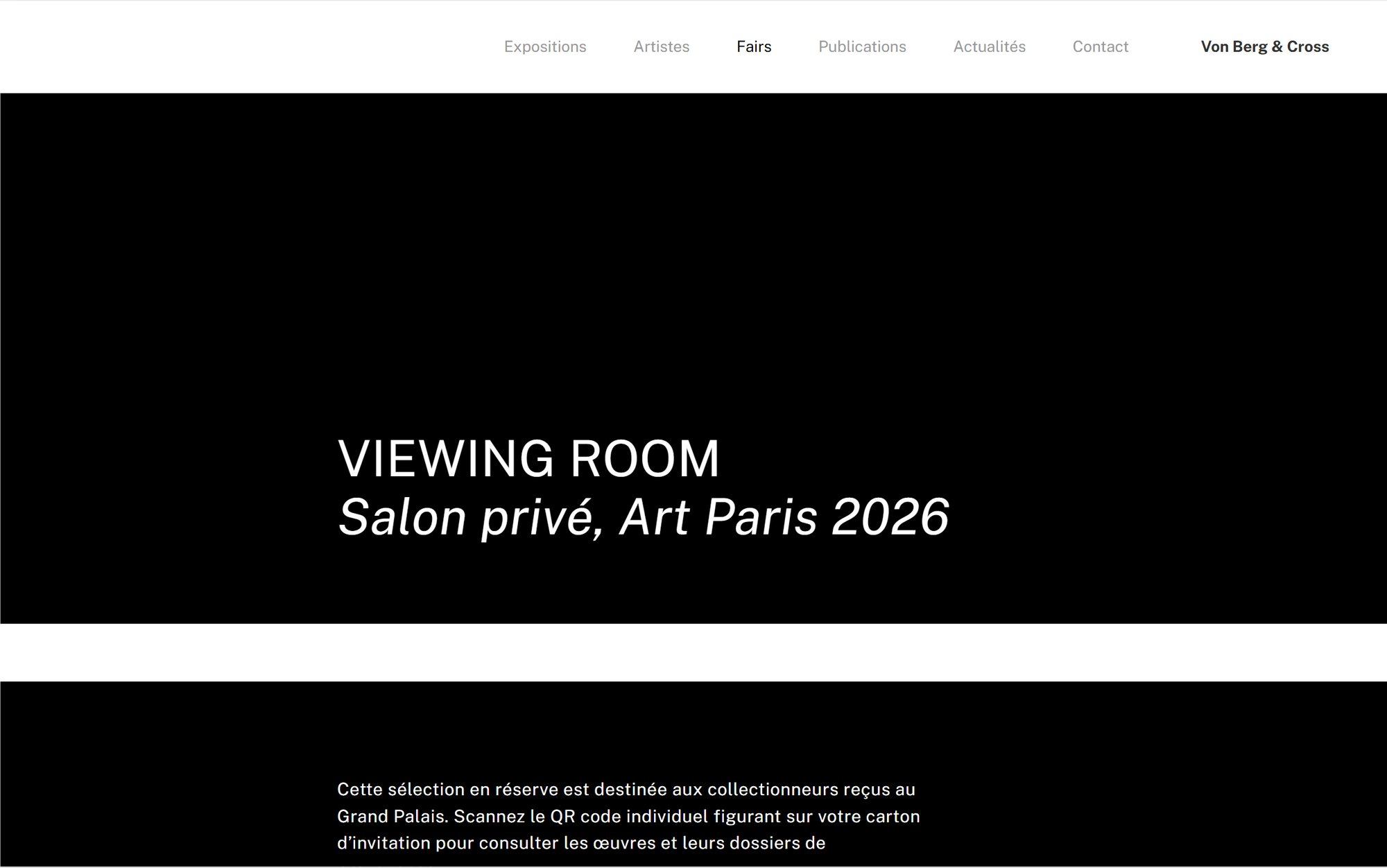
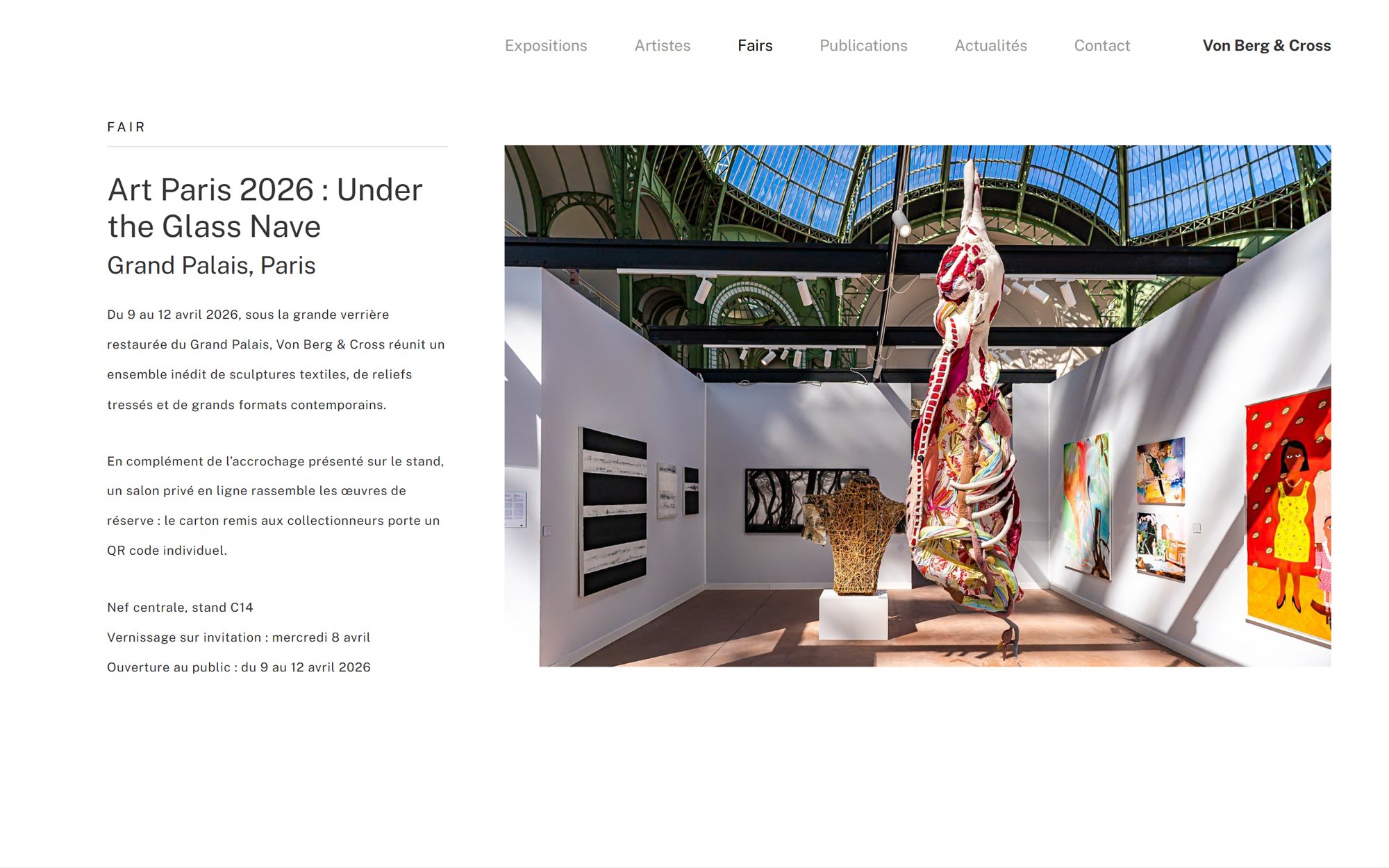
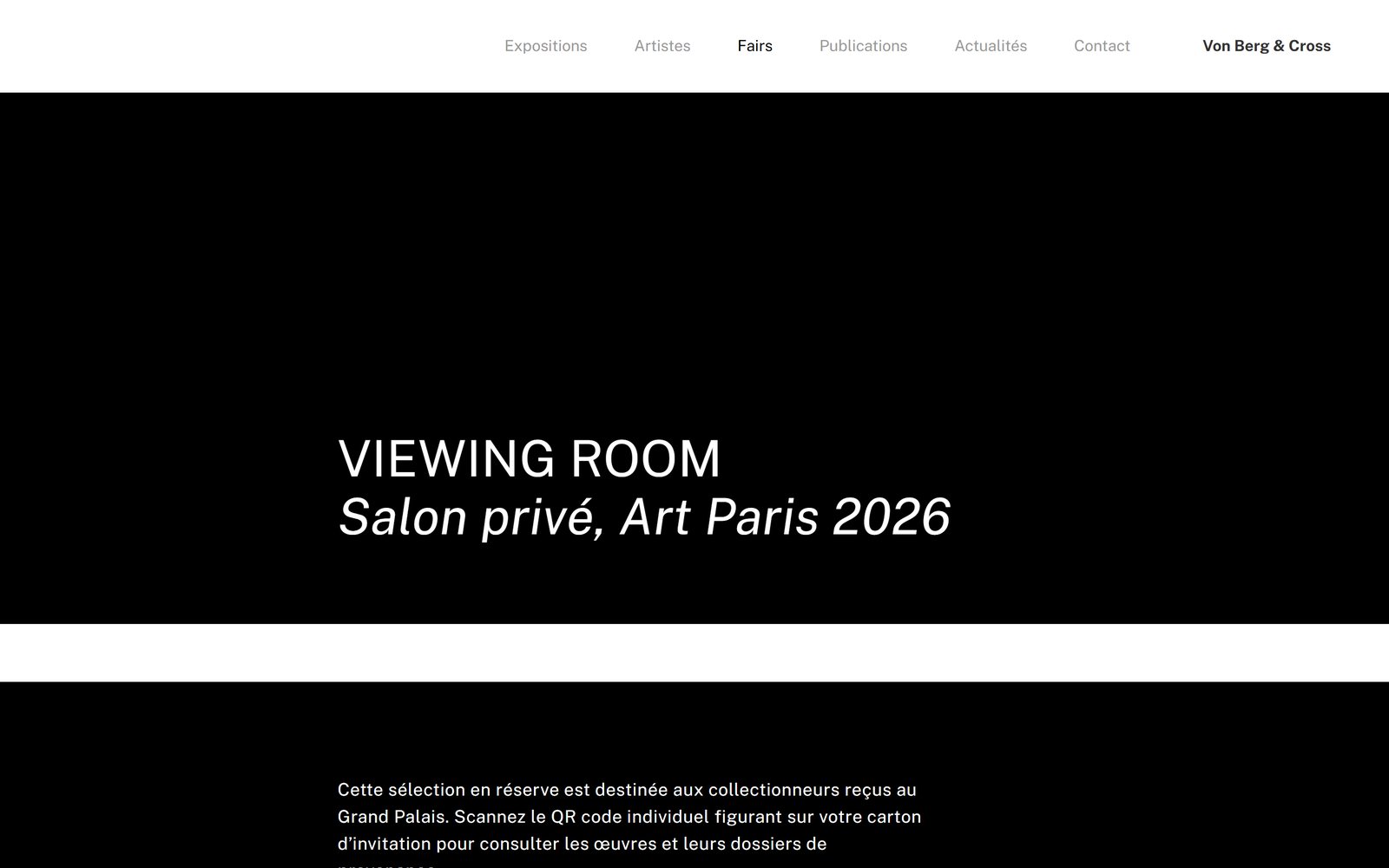
We conceived a dual-layer architecture: a minimalist museum showcase paced by generous in situ installation views, and an invitation-only system of digital Viewing Rooms unlocked via individualized QR codes during premier international gatherings such as Art Paris at the Grand Palais.
01 · Spatial scenography
Restoring artwork scale and gallery light
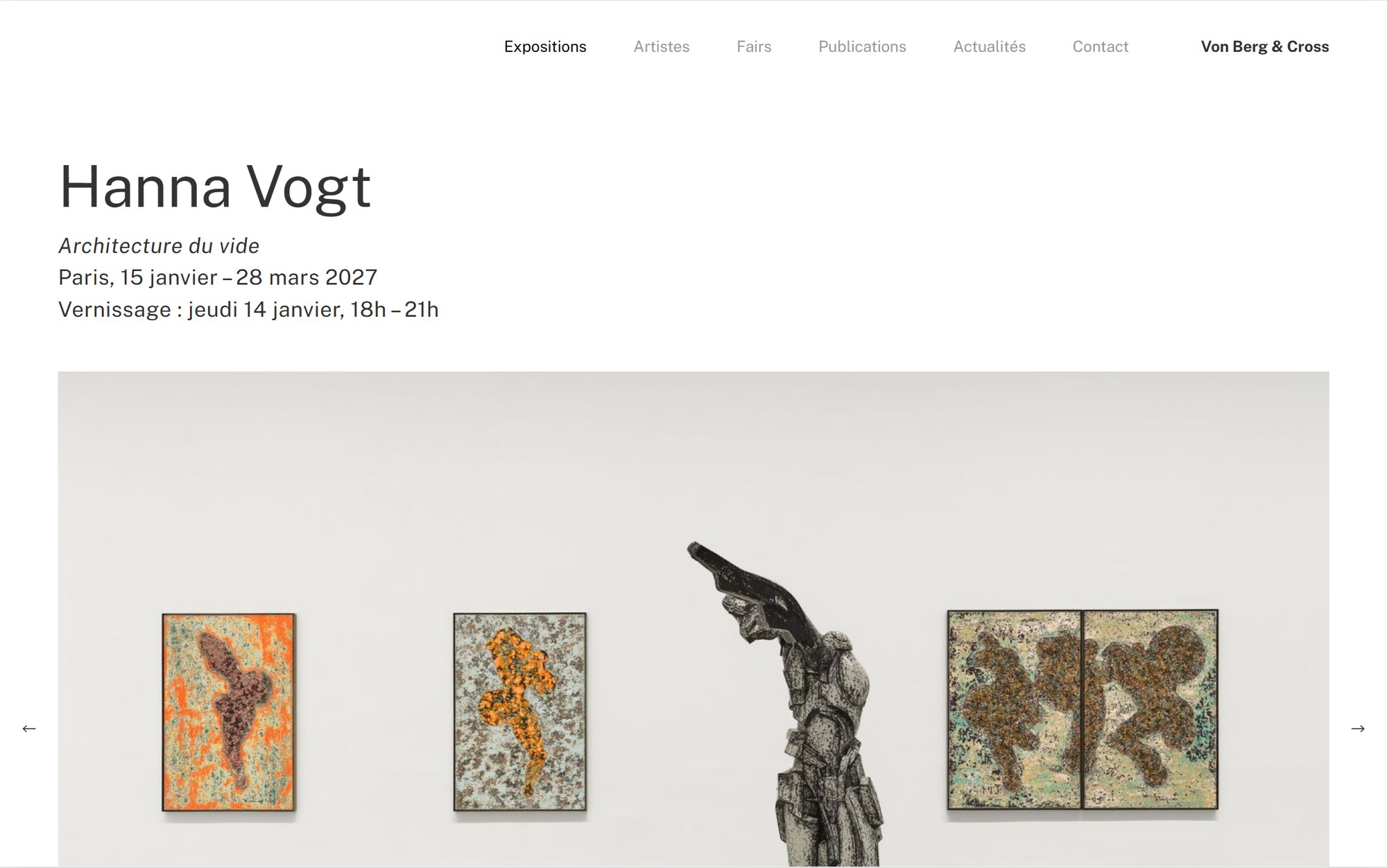
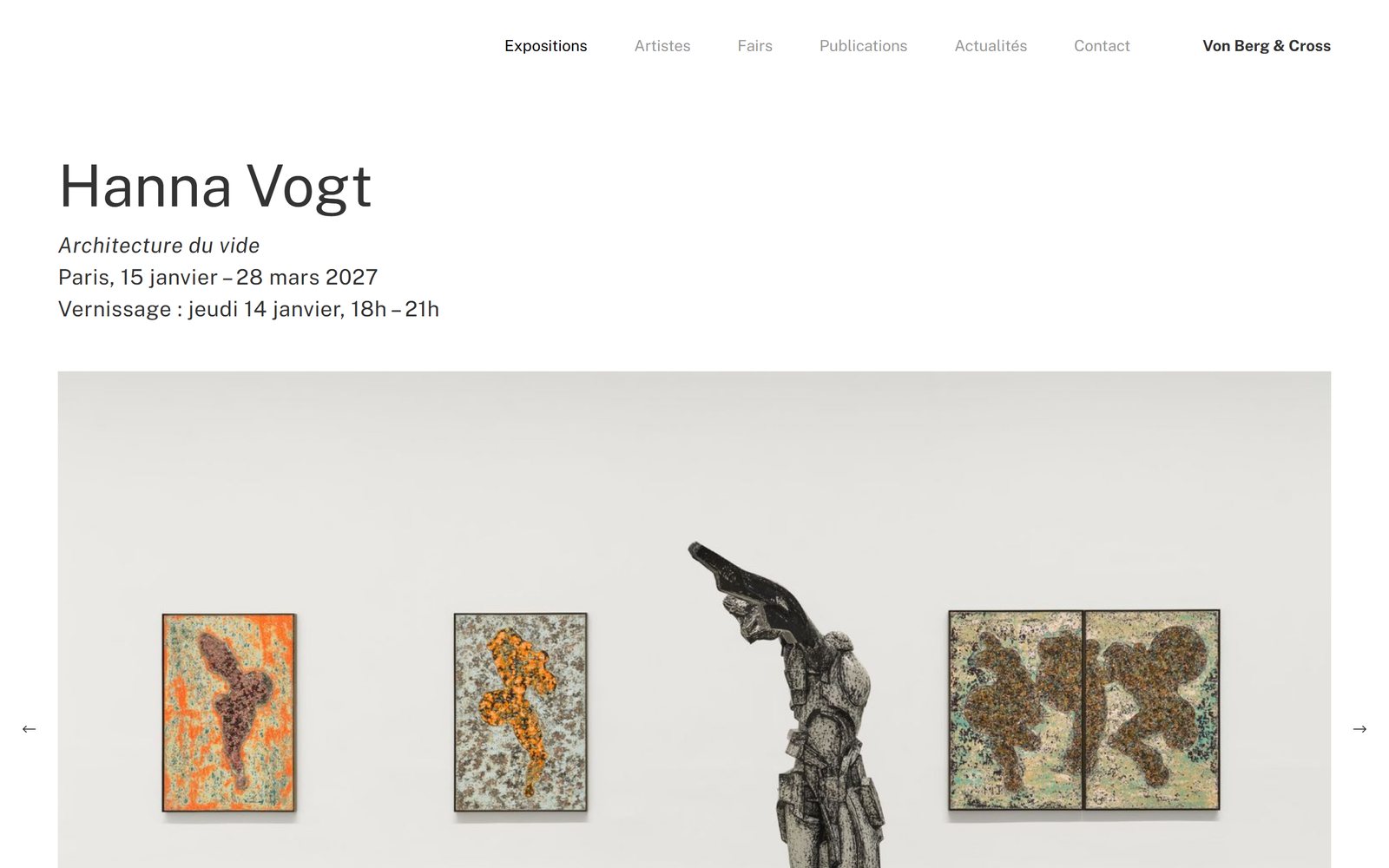
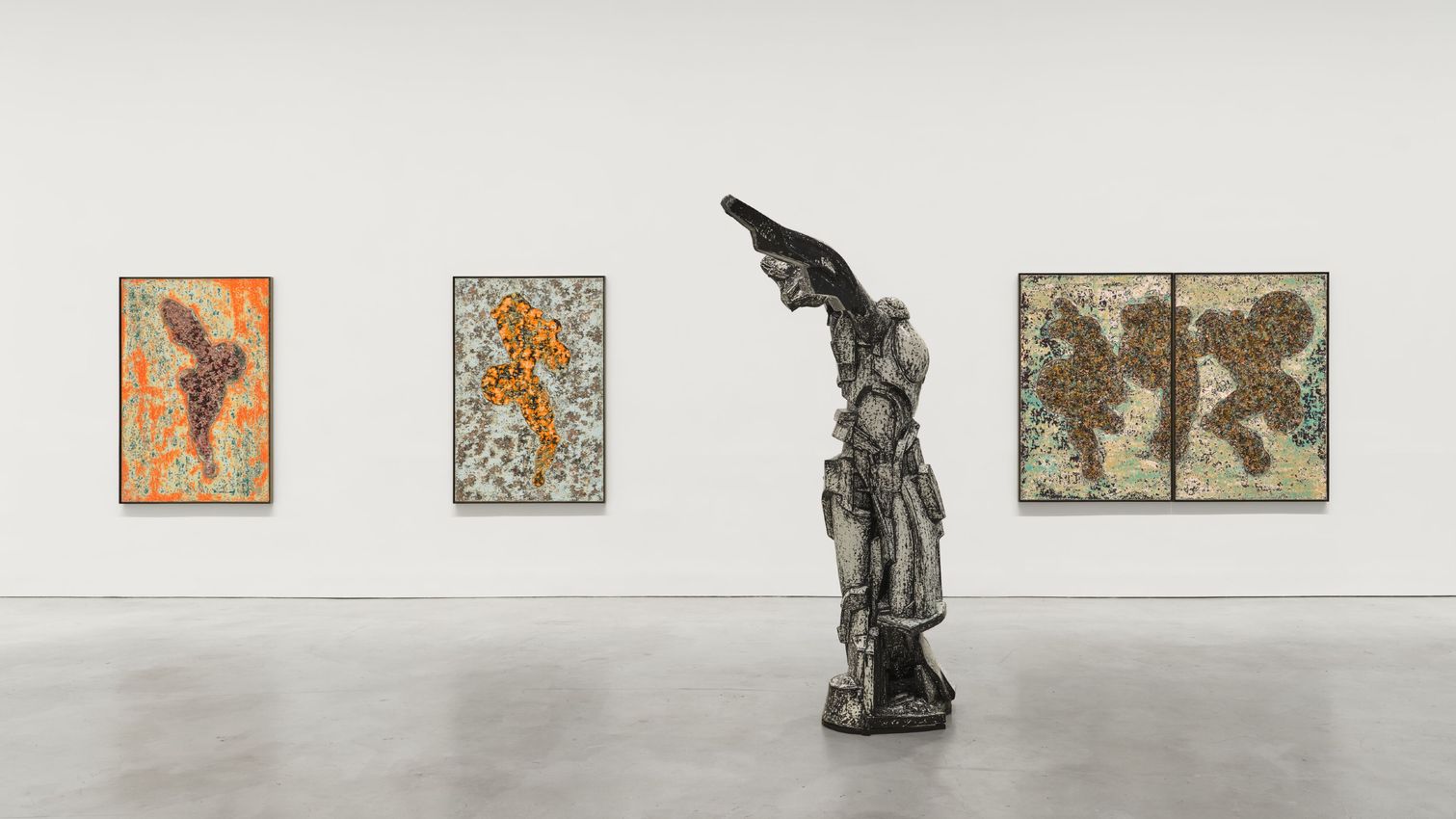
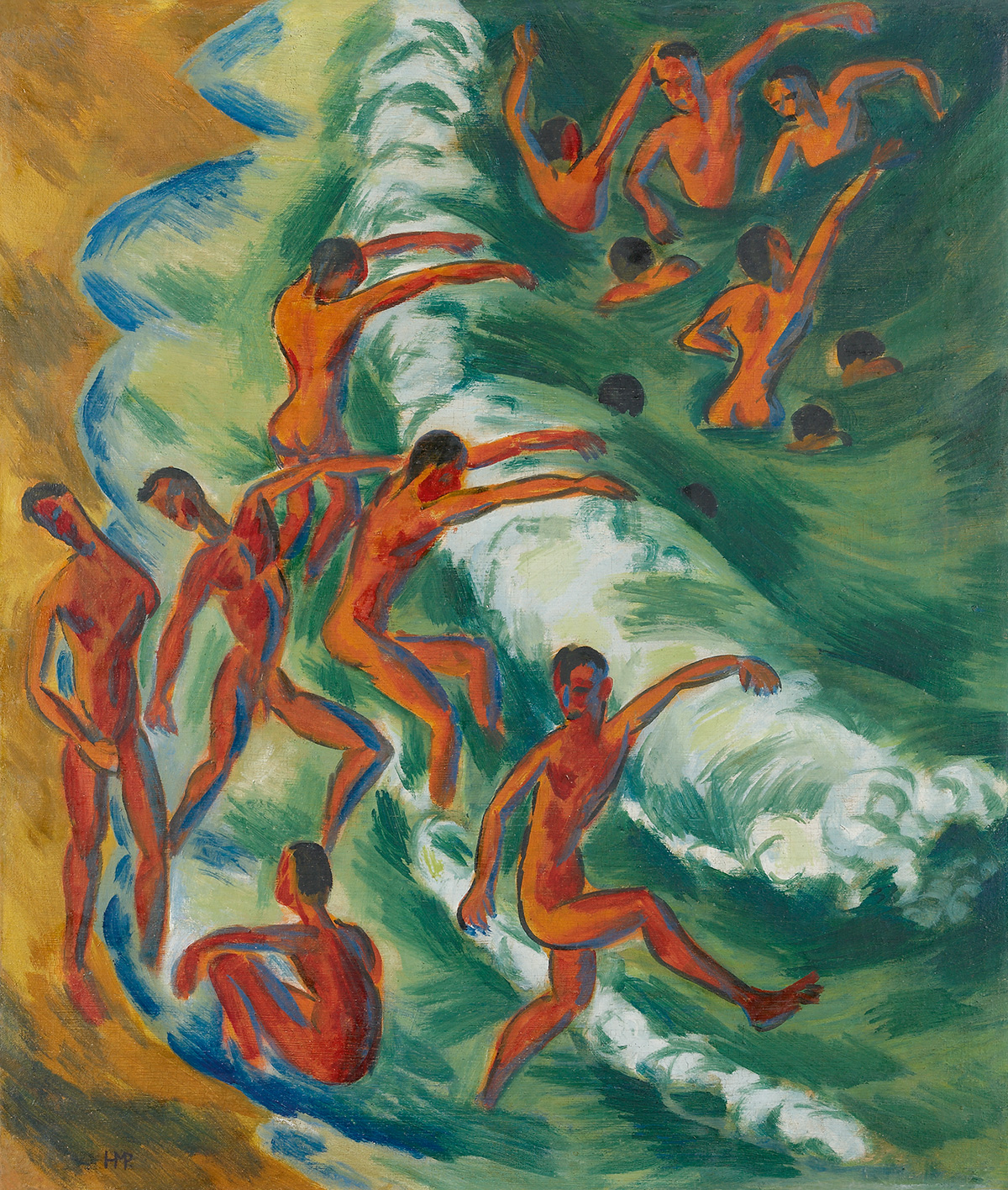
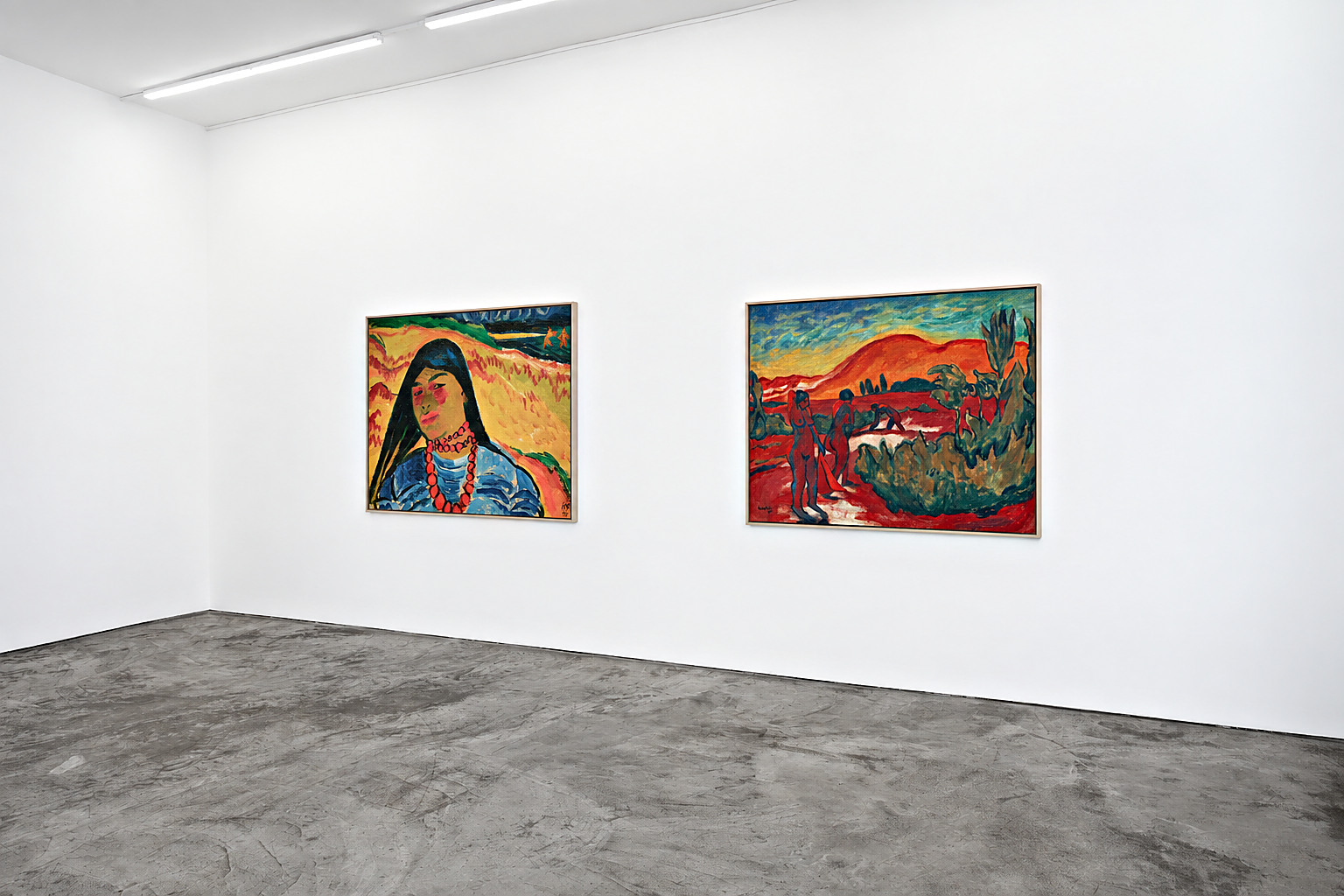
On a digital screen, an isolated thumbnail invariably distorts the perception of a sculpture or monumental canvas. The website therefore prioritizes in situ installation views: each piece unfolds within the architectural volume of the gallery, revealing genuine proportions, cast shadows and the breathing room of museum walls.
No artwork is cropped by layout constraints. Color profiles are meticulously preserved from end to end across the digital workflow to faithfully render the matte depth of raw pigment, the weave of unprimed linen, or the subtle patina of cast bronze.
02 · Private salons
Confidential Viewing Rooms, opened via QR code at art fairs
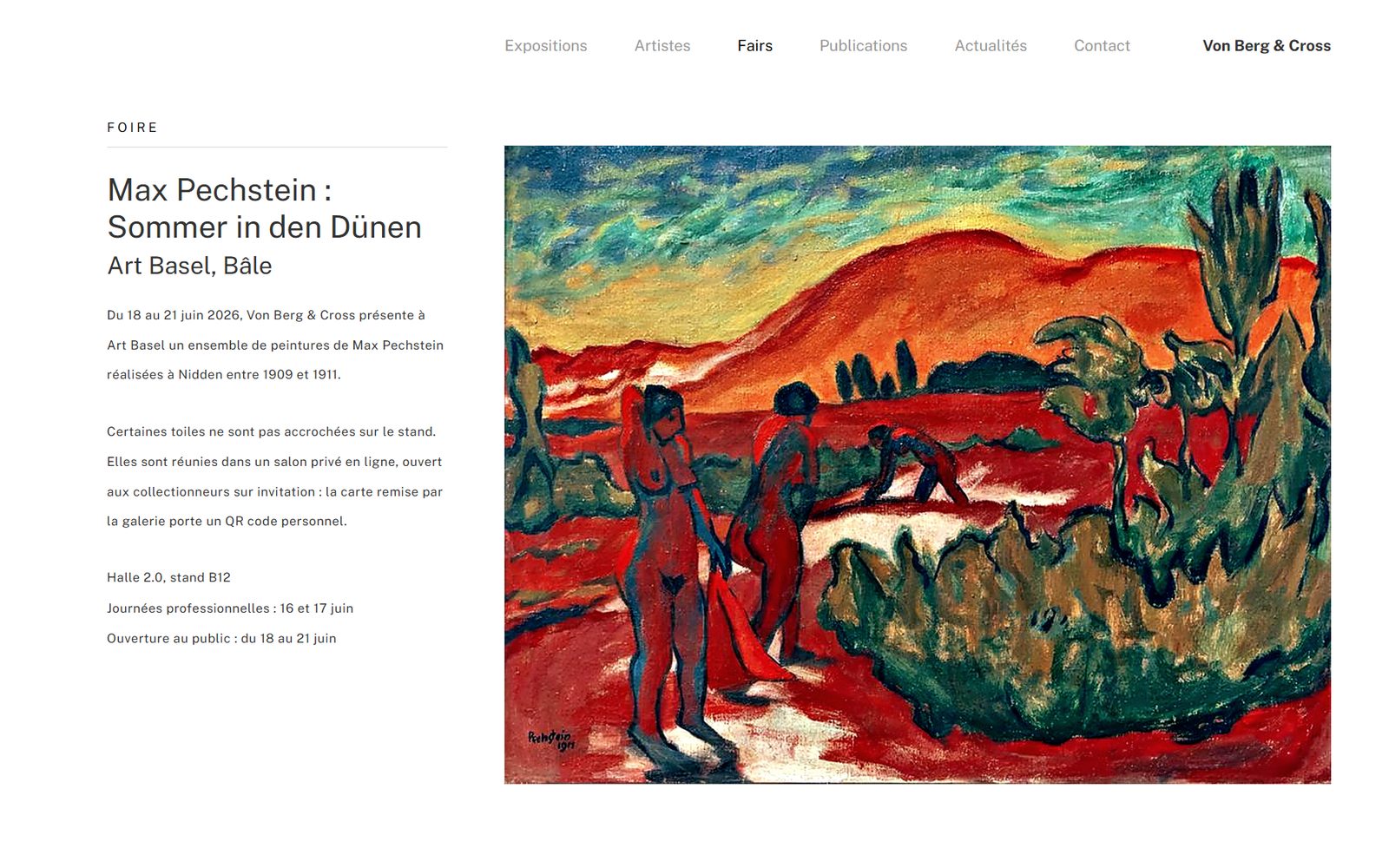
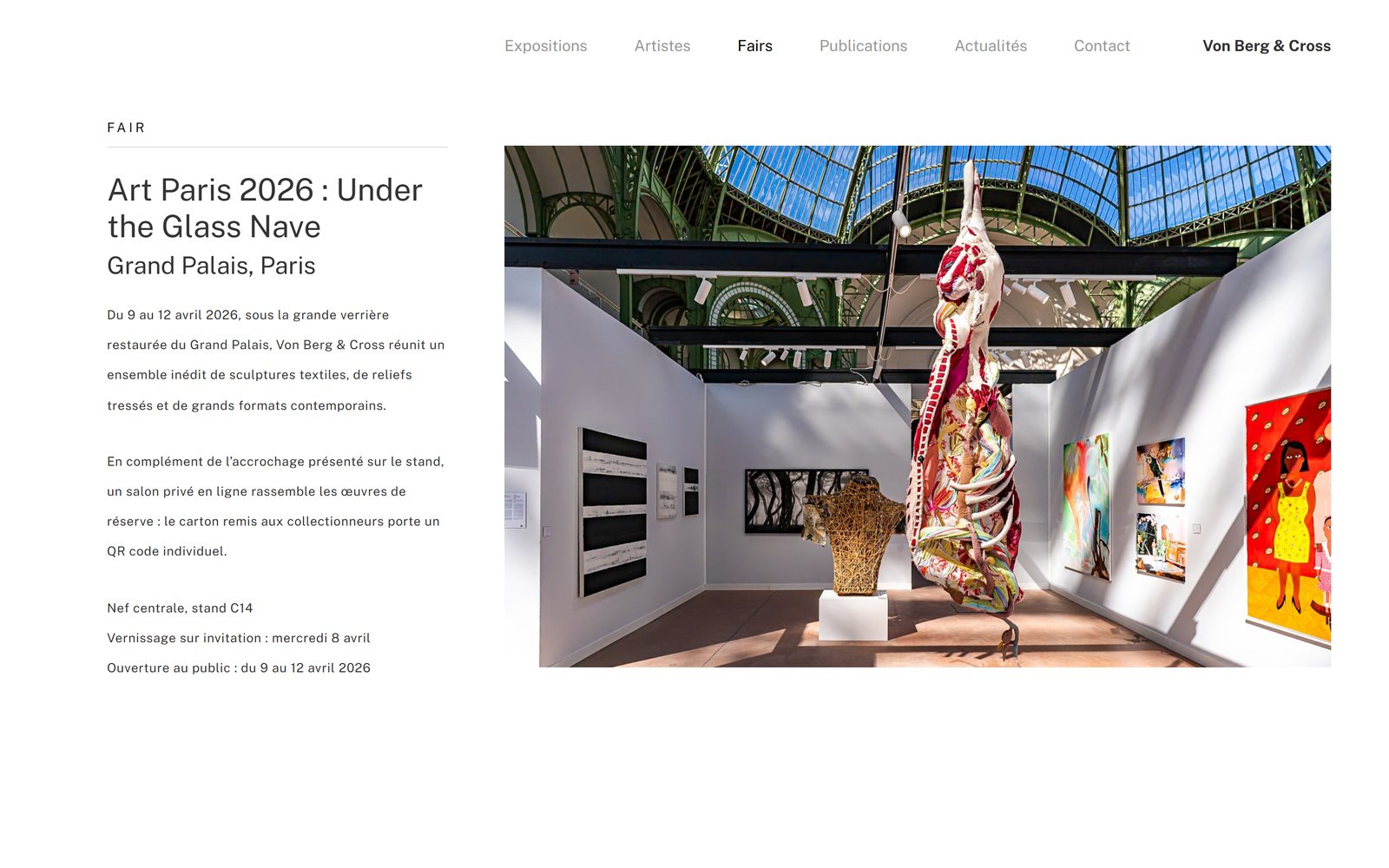
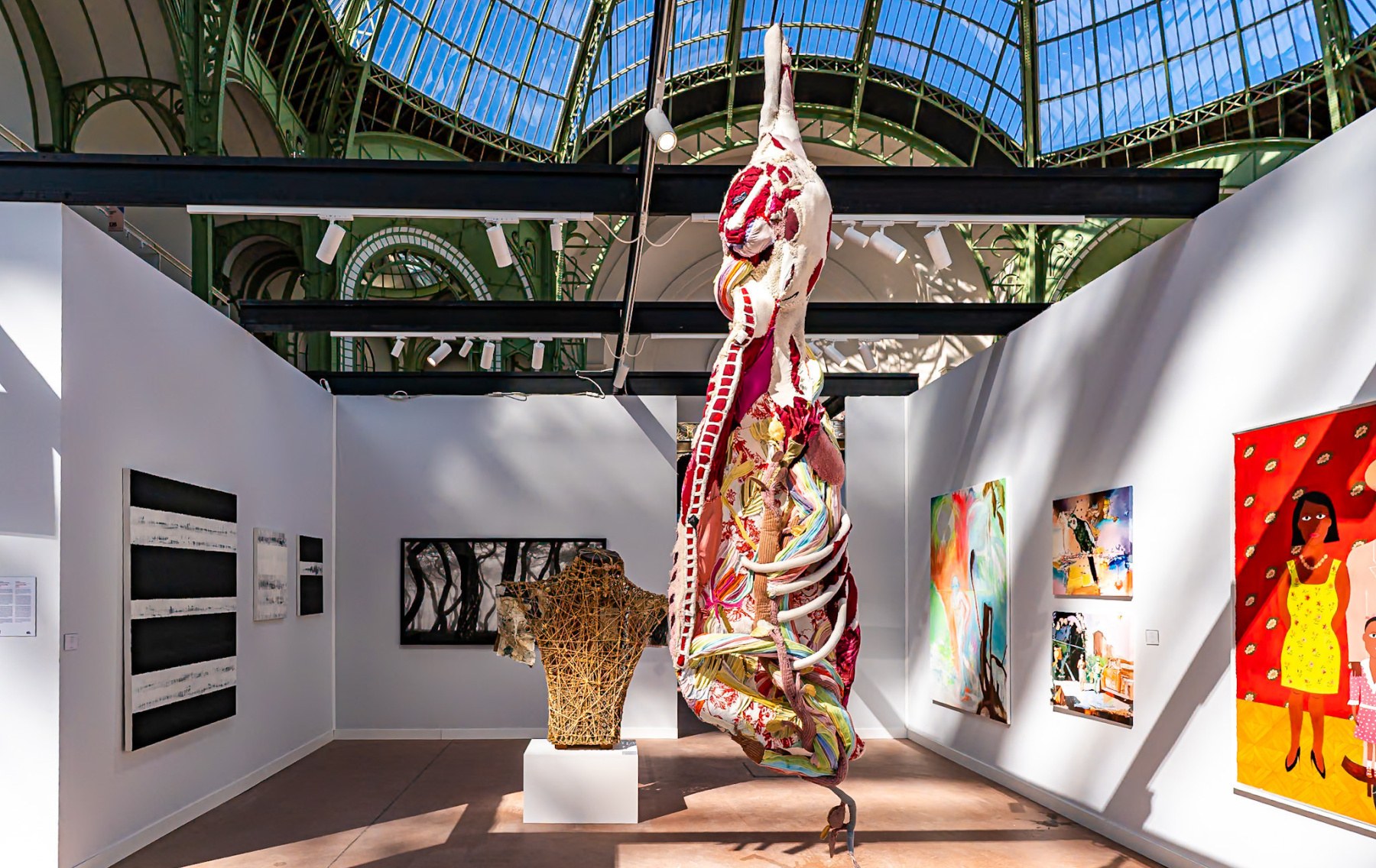
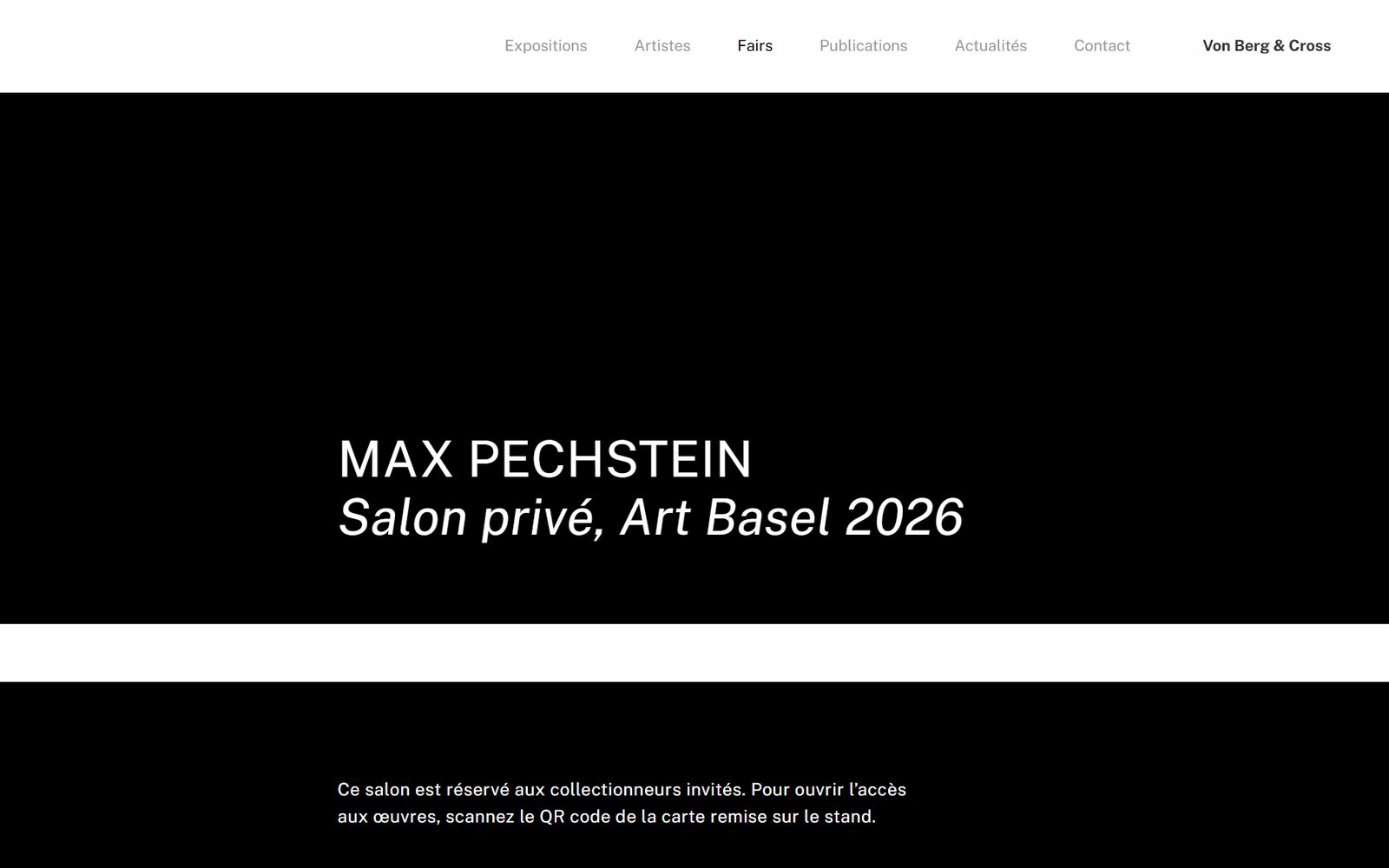
Beneath the glass nave of the Grand Palais or down the aisles of Art Basel, the most coveted secondary-market works are rarely hung on public partitions. For the gallery directors, we engineered private digital viewing salons accessible solely by invitation.
During an in-person conversation at the booth, collectors receive an engraved card bearing an individualized QR code: their mobile device instantly unlocks a confidential curated selection complete with condition reports, provenance certificates and acquisition terms.
03 · Catalogue aesthetic
The typographic rigor of a catalogue raisonné
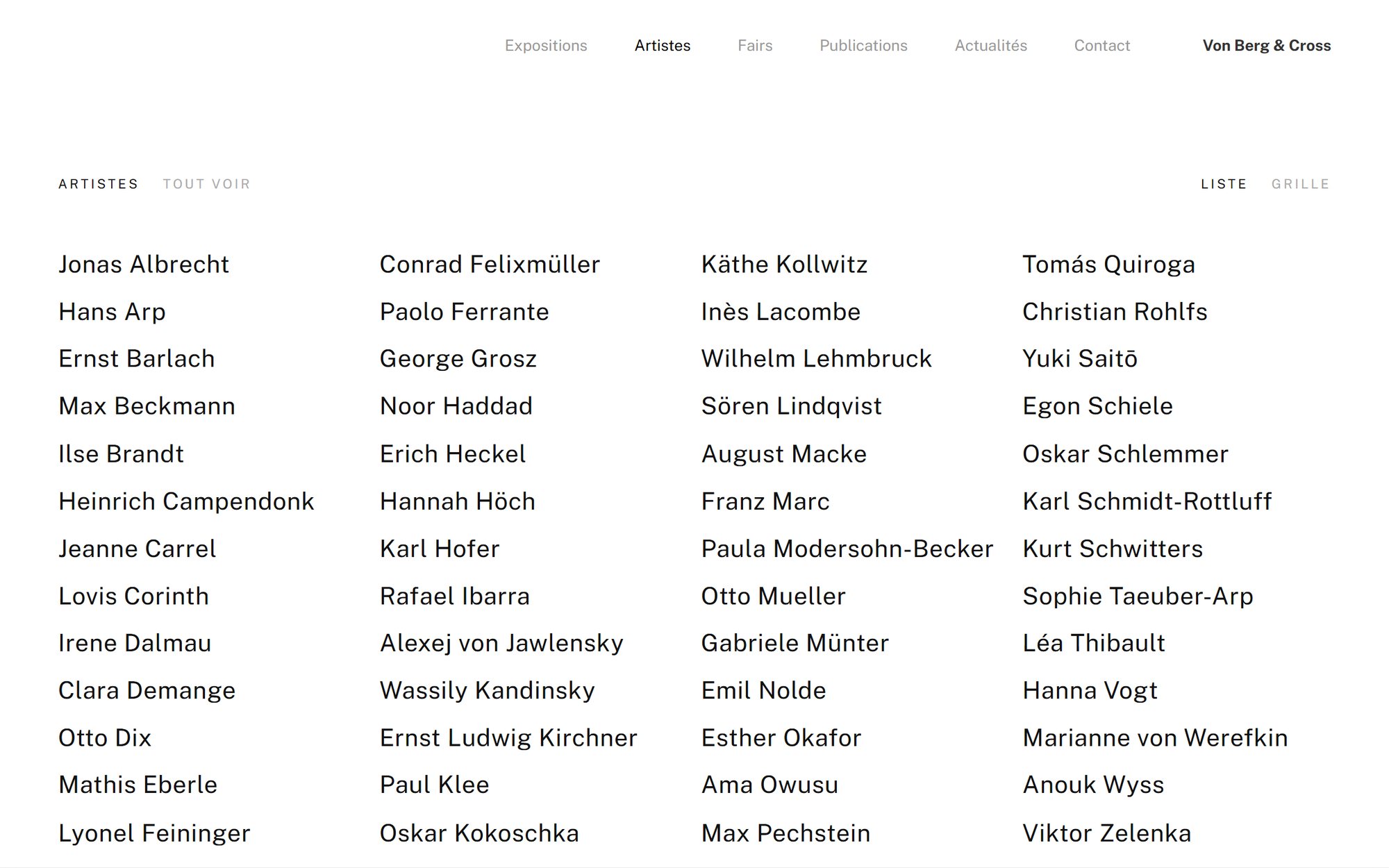
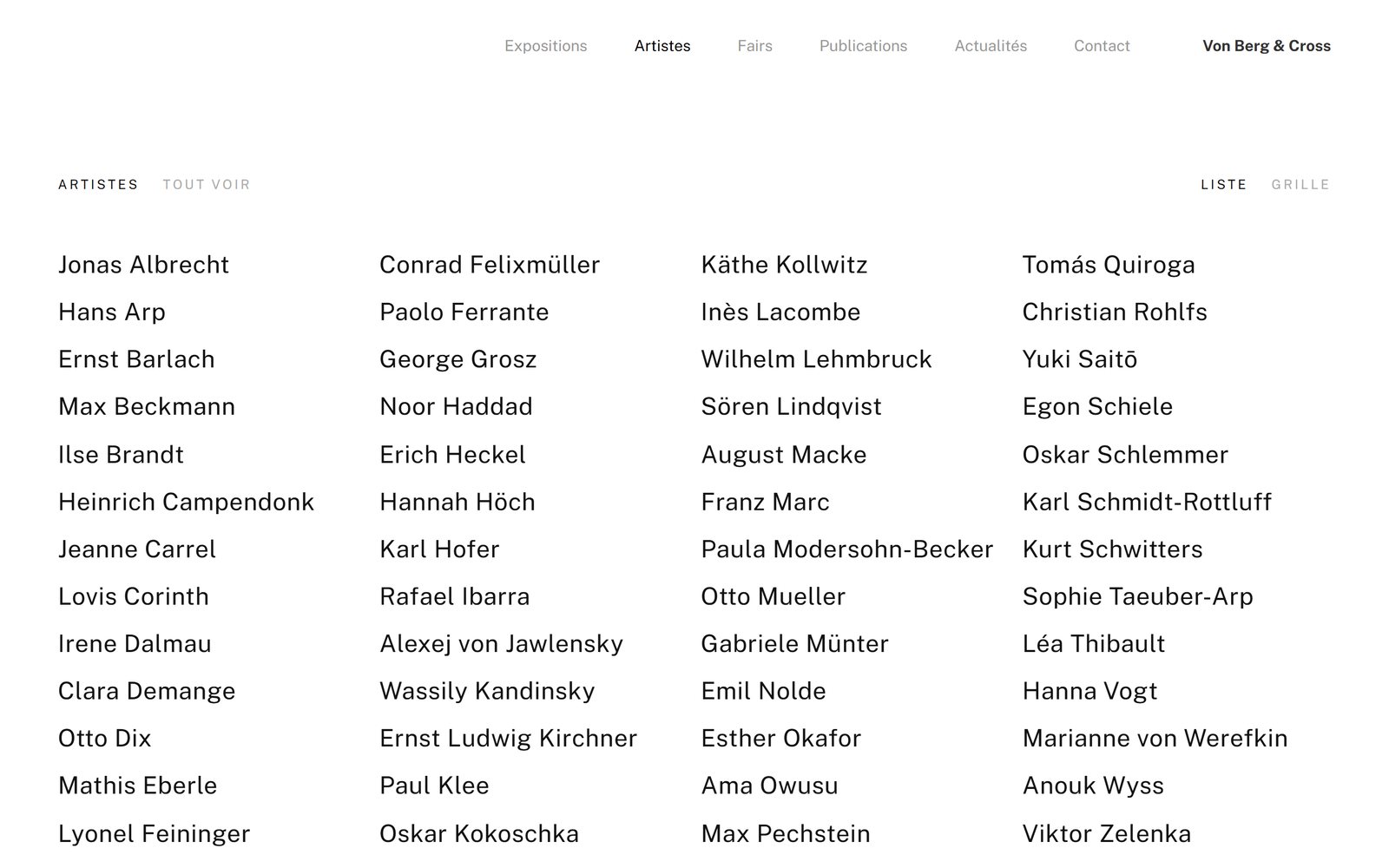
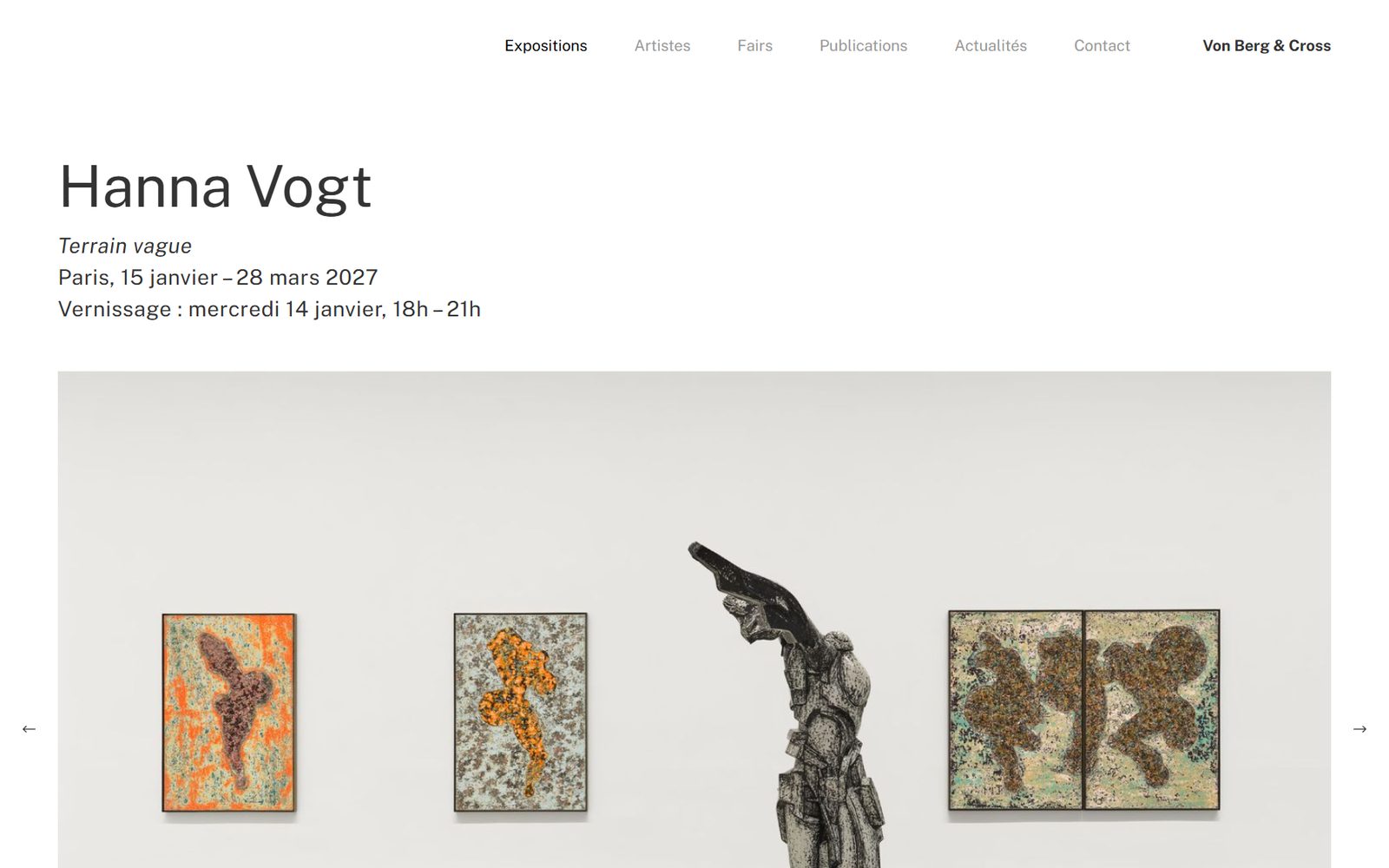
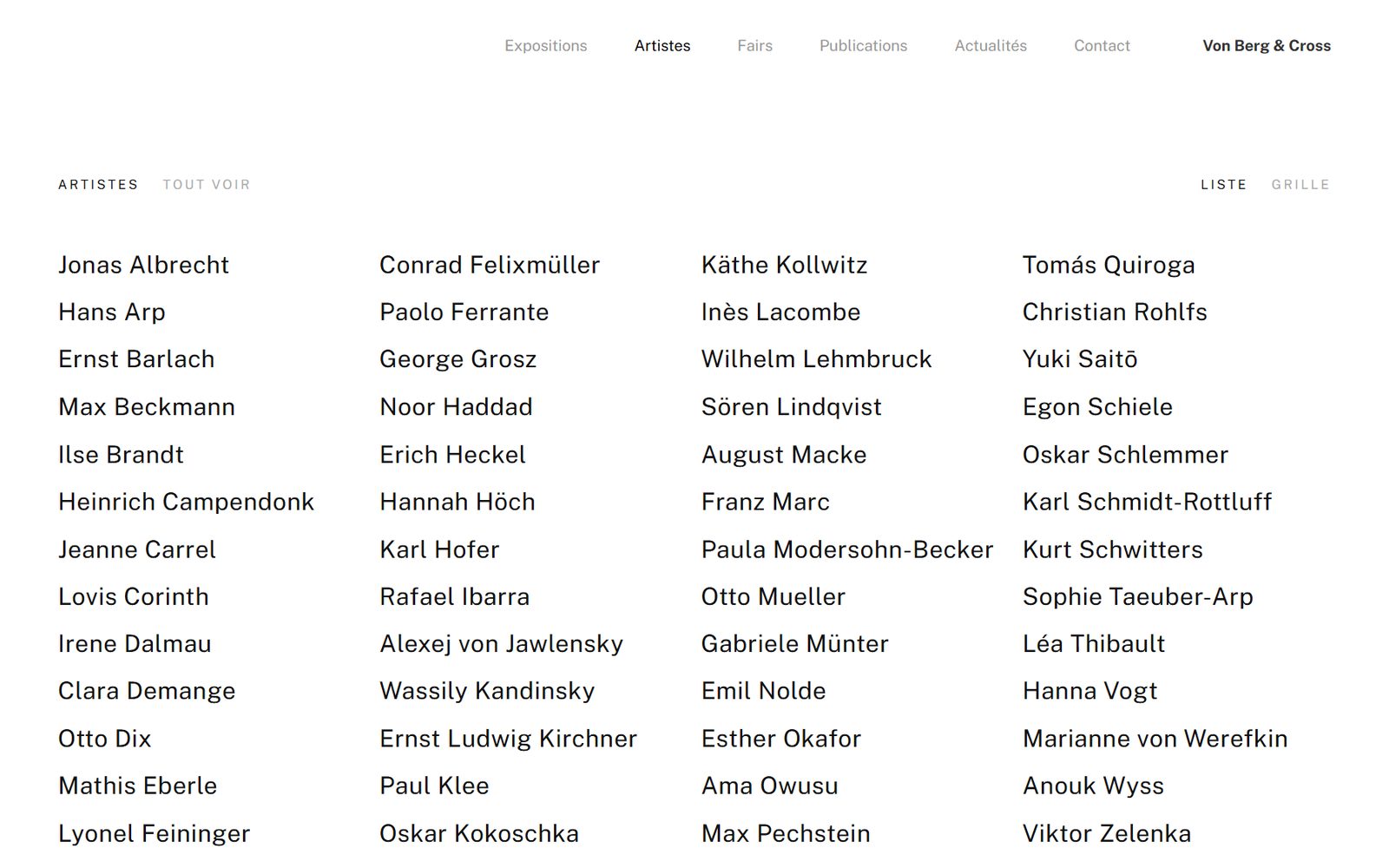
The art direction draws inspiration from Swiss art publishing: an asymmetrical grid calibrated to the millimeter, a neutral grotesque typeface, and an uncompromising use of paper-white space that recedes behind the polychromy of the artworks.
The interface banishes all decorative artifice. From the artists roster to exhibition overviews, only the artist's name, wall label and dates remain: navigation maintains the contemplative hush of a reading room, giving precedence entirely to the viewer's gaze.
04 · Scholarly documentation
Provenance, exhibition history and critical bibliography
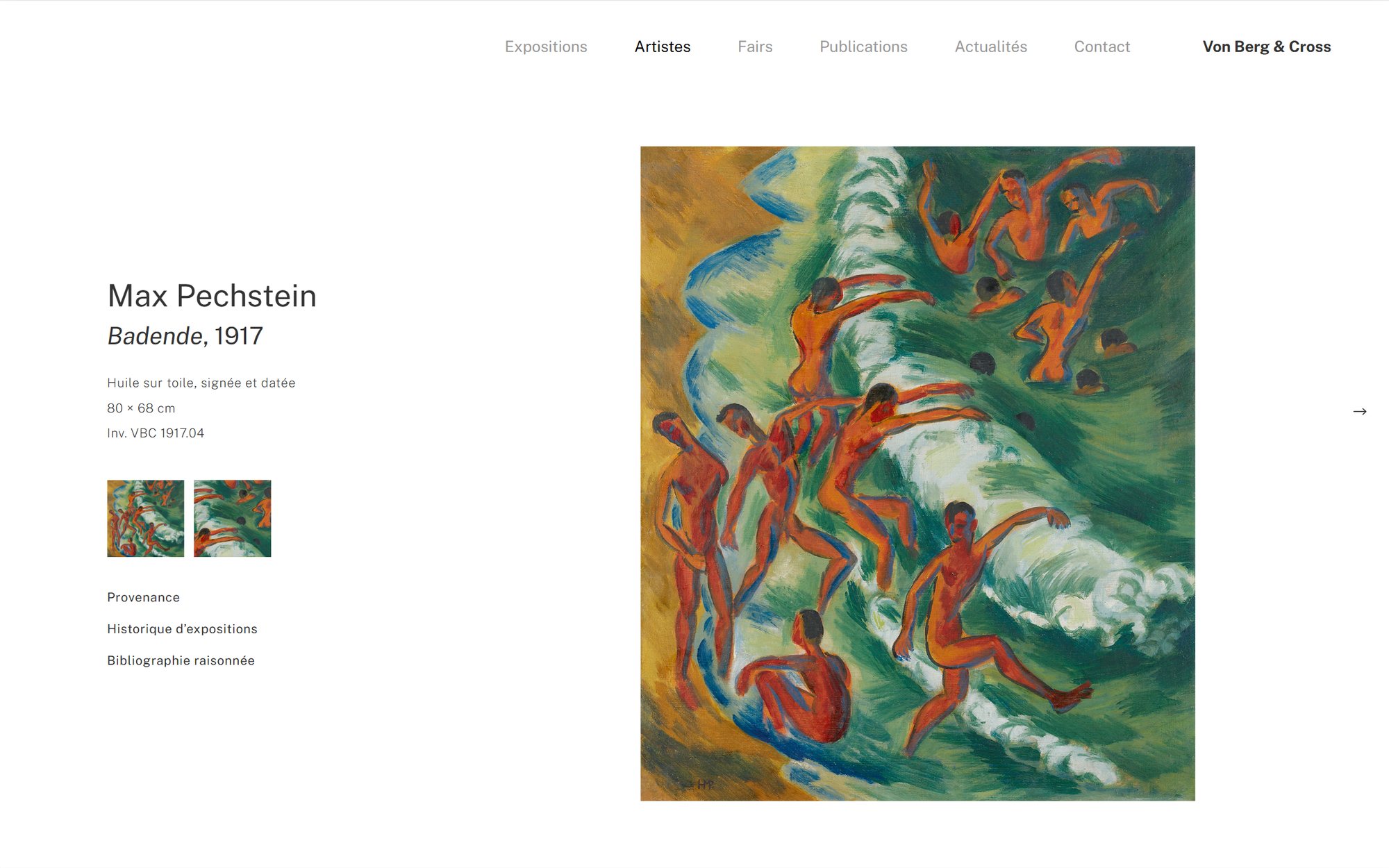
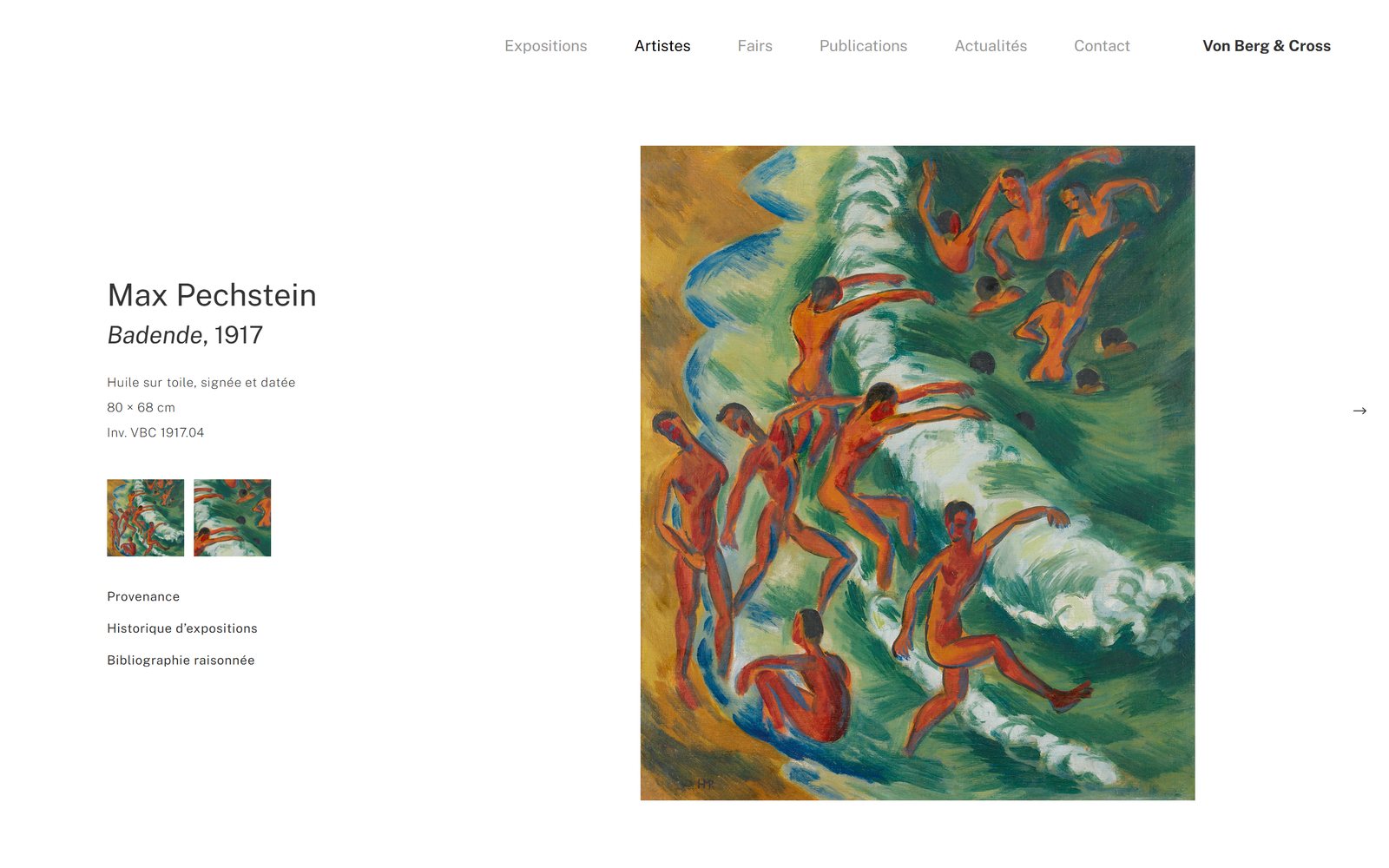
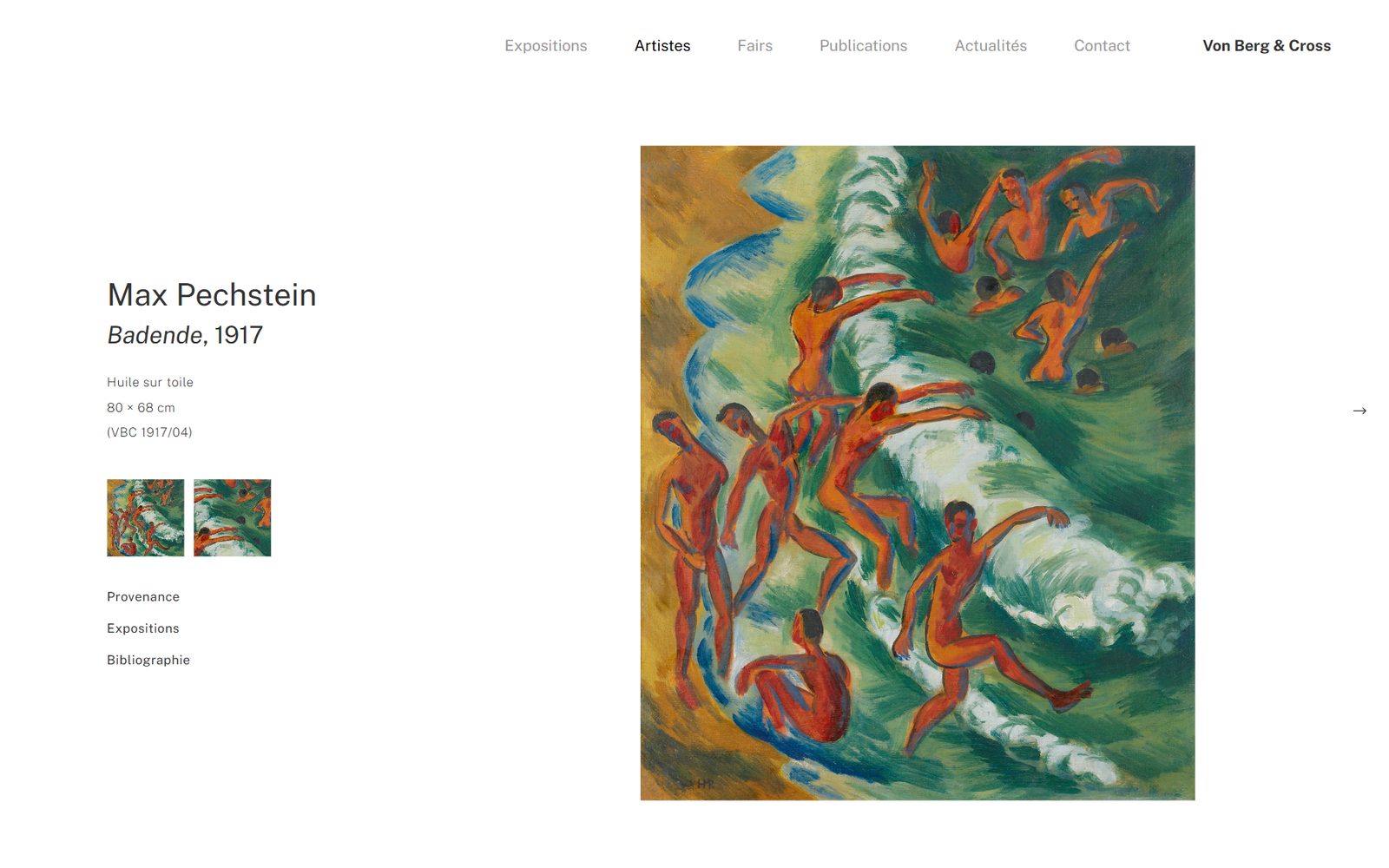
Acquiring a premier artwork hinges on the traceability of its history. Every individual entry was structured like a museum catalogue record, combining high-definition photography, surface details and exhaustive scholarly apparatus.
Past private collections, institutional exhibition chronologies and citations in catalogues raisonnés can be reviewed directly, providing museum curators and art advisors with every requisite assurance.
05 · SEO & AI authority
Global reach, from the Grand Palais to international art registries
Present every spring at Art Paris beneath the Grand Palais nave, as well as in Basel and London, the gallery must engage international collectors well ahead of each fair. Every fair preview and exhibition listing embeds comprehensive semantic schema markup (opening dates, booth coordinates, presented works).
By aligning artist records with international authority identifiers (Getty Research Institute ULAN, Wikidata), the site establishes itself with search engines and AI agents as an authoritative source on its represented artists.